


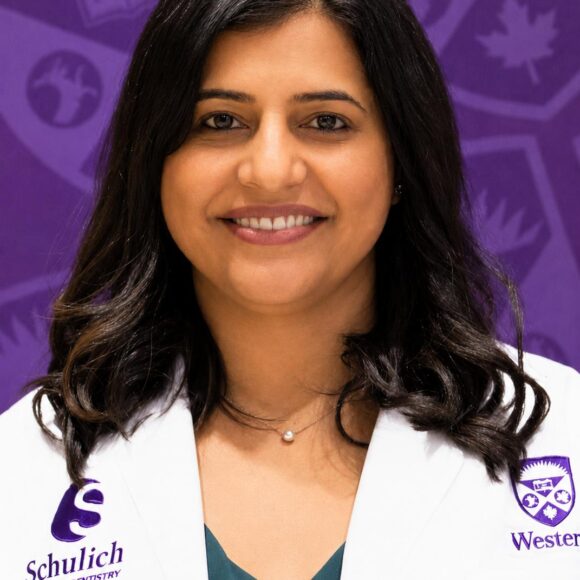
Dr. Gurulovleen Brar, DDS
Dentist
Dr. Brar earned her Doctor of Dental Surgery degree from Western University and brings over a decade of dental experience from both India and Canada.
Whether it’s the popular Opalescence Boost Whitening or at-home treatments, whitening can greatly improve the look of your teeth.
Regular cleanings are necessary to achieve and maintain a healthy smile, as well as detect early signs of cavities and decay.
Avoid the metal and wires of traditional braces with our accelerated Invisalign treatment options.
Staying up-to-date on your biannual dental cleanings can provide much more than a beautiful smile. Our routine check-ups are designed to help prevent dental issues from developing down the line, address any bacteria buildup or tooth decay, detect bite alignment concerns, oral disease, and other oral issues, as well as teach healthy oral hygiene habits. A hygienist will also be assigned to you at this time to clean and polish your teeth, ensuring excellent gum health.
When you arrive, we will begin with an oral examination, which will allow us to detect any developing problems before they become larger issues. We utilize digital X-rays, which can provide greater speed, comfort, safety, and efficacy than traditional methods that use film and require exposure to significantly higher levels of radiation. Like all cancer, oral cancer presents a serious risk for individuals of all backgrounds and ages. All of our oral exams include cancer screenings to look for the early-signs of oral cancer. Call today and schedule a complete oral exam with our doctors.
Regular dental checkups allow your dental team to monitor changes in your teeth, gums, bite, and overall oral health. They can help identify concerns such as cavities, gum disease, cracked or worn teeth, infections, and other problems before they become more advanced. Dental exams also provide an opportunity to discuss symptoms, home care, and any treatment that may be recommended.
During a routine dental exam, your dentist will assess your teeth, gums, bite, and other areas of your mouth for signs of decay, gum disease, damage, or other oral health concerns. Your medical and dental history may also be reviewed. X-rays may be recommended when needed to evaluate areas that cannot be fully assessed visually. Your dentist will then discuss any findings and recommended next steps.
The right interval between dental checkups depends on your individual oral health needs. Some patients benefit from more frequent visits, while others may need them less often. Your dentist can recommend a schedule based on factors such as your gum health, cavity risk, dental history, and ongoing treatment needs.
A cavity may cause tooth sensitivity, pain when eating or drinking something sweet, hot, or cold, discomfort when biting, or a visible hole or dark spot on a tooth. However, cavities do not always cause noticeable symptoms in their early stages. Regular dental exams and appropriate X-rays can help identify tooth decay before it becomes more advanced.
If it has been several years since your last dental visit, the first step is simply to book an examination. Your dentist can assess your teeth and gums, identify any concerns, and discuss recommended preventive or restorative care. Treatment can then be planned based on your current oral health and priorities.
In a dental emergency, the sooner you seek treatment, the better. It is even possible to save a tooth that has been knocked out if you can get treatment within an hour. The middle of the night, holidays, vacations – these are the inconvenient times when a dental emergency can happen. Trying to go through your day with a missing tooth—or worse—in severe pain is unacceptable. Our doctors are here to serve from 9AM till 5PM, with our answering service operating from 5PM to 9 AM.
We make every attempt to provide emergency patients with same day dental appointments as high priorities. If pain occurs during closed-hours, we are still available to assist. Call our office at any time, and a doctor will be in touch as soon as possible.

A dental emergency can include severe or persistent tooth pain, facial or gum swelling, uncontrolled bleeding, a knocked-out tooth, significant dental trauma, a broken tooth causing pain, or signs of infection. Some problems are more urgent than others, so if you are unsure, contact Grand Bend Family Dental for guidance.
Yes. Grand Bend Family Dental offers emergency dental appointments for patients experiencing urgent dental concerns in Grand Bend. Availability can vary, so contact our office as soon as possible if you have severe tooth pain, swelling, a broken tooth, an infection, or another urgent problem.
Severe tooth pain should be assessed by a dentist as soon as possible. Tooth pain can result from decay, infection, a cracked tooth, inflammation inside the tooth, or other conditions that require treatment. Avoid placing aspirin directly on the tooth or gums. If the pain is accompanied by significant swelling, fever, or difficulty breathing or swallowing, seek urgent medical attention.
Contact a dentist promptly if you break or chip a tooth. Rinse your mouth gently with water, save any broken pieces if possible, and avoid chewing on the affected side. Even a painless fracture should be assessed because damage can extend deeper into the tooth. Significant pain, bleeding, or facial trauma may require urgent attention.
A knocked-out permanent tooth requires immediate attention. Handle the tooth by the crown rather than the root and, if dirty, gently rinse it without scrubbing. If possible, place it back into the socket without forcing it. Otherwise, keep it moist in milk or an appropriate tooth-preservation solution and contact a dentist immediately. Prompt treatment can improve the chance that the tooth may be successfully replanted.
Your child’s oral health is integral to their general health. Cavity prevention starts at an early age, and begins with ensuring that your child develops proper oral hygiene and healthy dietary habits early-on. The Canadian Dental Association recommends the assessment of infants, by a dentist, within 6 months of the eruption of the first tooth or by one year of age. Our goal is to provide the highest quality of care for your child and our mission is to make the experience as pleasant and as fun as possible to facilitate a positive attitude towards dental health in your child.
We are aware of the anxiety that can accompany dental treatment. We strive to provide a warm supportive environment. We offer nitrous oxide sedation (ie. laughing gas) to create a pleasant experience for nervous children.

Yes. Grand Bend Family Dental provides dental care for children as part of our family dentistry services. Regular visits allow the dental team to monitor oral development, identify concerns, provide preventive care, and help children establish healthy brushing and flossing habits.
Children should generally have their first dental visit within six months of their first tooth appearing or by their first birthday. Early visits allow the dental team to monitor tooth development, identify concerns early, and help parents establish good oral-health habits. They can also help children become more familiar with the dental office.
The frequency of dental visits depends on the individual child and their oral health needs. Your dentist can recommend an appropriate schedule based on factors such as tooth development, cavity risk, oral hygiene, and any existing dental concerns.
Help your child brush twice a day with an age-appropriate amount of fluoride toothpaste, clean between teeth when they begin to touch, and limit frequent sugary foods and drinks. Regular dental visits are also important. Your dental team may recommend preventive treatments such as fluoride applications or dental sealants depending on your child's individual cavity risk.
Possible signs of a cavity can include tooth sensitivity, pain with sweet, hot, or cold foods and drinks, discomfort when chewing, or a visible dark spot or hole in a tooth. Early cavities may cause no symptoms, which is one reason routine dental examinations are important for children.
Unlike home-use whitening systems that incorporate low-dose bleaching agents, in-office whitening takes place under carefully monitored conditions which allow for the safe, controlled, pain-free use of a relatively high concentration of bleaching gel – yielding results that are visible immediately.
Our office offers a variety of teeth whitening services to suit your cosmetic dentistry needs. Whether it’s a quick in-office whitening with our Opalescence Boost Whitening, or custom trays for at-home bleaching, our office provides effective whitening solutions with proven results. Book a consultation with us today and see how we can give you the whiter smile you’ve always dreamed of.
Professional teeth whitening commonly uses peroxide-based whitening agents that penetrate the tooth structure and break down compounds responsible for staining. Whitening may be completed in the dental office or with dentist-supervised take-home products, depending on the system being used. Results vary depending on the type and severity of staining.
Whitening results vary from person to person and are not permanent. How long your teeth remain lighter depends on factors such as coffee, tea, red wine, tobacco use, oral hygiene, and natural changes in tooth colour. Periodic touch-up treatment may help maintain results when recommended by your dental professional.
Professional teeth whitening is generally considered safe when appropriate products are used as directed and the teeth and gums are healthy enough for treatment. Temporary tooth sensitivity and gum irritation are among the most common side effects. A dental assessment can help identify cavities, gum problems, or other concerns that should be addressed before whitening.
No. Whitening products lighten natural tooth structure but do not change the colour of crowns, veneers, tooth-coloured fillings, or other restorations. This can sometimes create a noticeable colour difference between natural teeth and existing restorations, so it is helpful to discuss this with your dentist before whitening.
Professional whitening is provided or supervised by a dental professional and can be selected based on your teeth, existing restorations, sensitivity, and treatment goals. Over-the-counter products typically use standardized concentrations and trays or strips designed to fit many users. A dental professional can assess your oral health and recommend an appropriate whitening approach.
A filling is a way to restore a tooth damaged by decay back to its normal function and shape. When a dentist gives you a filling, he or she first removes the decayed tooth material, cleans the affected area, and then fills the cleaned out cavity with a filling material. By closing off spaces where bacteria can enter, a filling also helps prevent further decay. Materials used for fillings include gold, porcelain, a composite resin. We primarily offer tooth-coloured fillings at our practice.
Cosmetic bonding is utilizing tooth-coloured filling material to reshape broken, chipped, and discoloured teeth. Gone are the days when tooth trauma and cavities could only be treated with unsightly metal fillings. Today, modern, tooth-colored fillings made of durable resin can be bonded to your teeth for a stronger, more natural-looking effect. Composite fillings are virtually undetectable and require only a single appointment to apply.
Our doctors have been trained to manage a wide variety of problems relating to the mouth, teeth and facial regions. We offer a wide range of oral surgery treatments, ranging from dental extractions, the removal of difficult or impacted teeth (wisdom teeth), the placement of dental implants, and various other surgical procedures, often without the need for referral to big-city practices.
Wisdom tooth removal is important in preventive care and maintaining healthy teeth. It also relieves the aches and pains that result from having an impacted wisdom tooth. If you need to have a wisdom tooth removal procedure done, we are here to help. We offer referral to our partner dental offices should you desire full sedation (be put to sleep) for difficult extraction cases, as well as in-office nitrous (laughing gas) and oral sedation for anxious patients.
If one or more of your teeth are missing, there are a number of ways to replace them. An alternative to bridges, partials or complete dentures may be dental implants. Implants are used to replace missing roots and support artificial replacement teeth. They are comfortable, long-lasting, and look like natural teeth. In addition to looking and functioning like a natural tooth, a dental implant replaces a single tooth without sacrificing the health of neighboring teeth.
A dental implant provides several advantages over other tooth replacement options. A single implant can be more esthetic and easier to keep clean than a bridge. They also act as a support for full and partial dentures, since the implants integrate with the bone to act as an anchor for the replacement teeth. The cost of these implants has become very affordable. Book a consultation with us today and see how dental implants can benefit you.
A dental implant is a biocompatible post, typically made of titanium, that is surgically placed into the jawbone to replace the root of a missing tooth. Once the implant has integrated with the bone, it can support a dental crown, bridge, or other restoration used to replace missing teeth.
Dental implants may be an option for adults who are missing one or more teeth and have adequate oral health and bone support. Gum health, bone quantity, smoking, certain medical conditions, and medications can affect implant treatment. A clinical examination and dental imaging are typically required to determine whether implants are appropriate.
The dental implant process often takes several months because time is needed for the implant to heal and integrate with the surrounding bone before the final restoration is placed. The exact timeline depends on factors such as healing, bone quality, whether bone grafting is required, and the type of restoration being completed.
Dental implants are designed as a long-term tooth replacement option, but their lifespan varies between patients. Good oral hygiene, regular dental care, healthy gums, and avoiding habits such as smoking can help support long-term implant health. The crown or other restoration attached to the implant may eventually require repair or replacement even when the implant itself remains stable.
Dental implants can replace a missing tooth without relying on neighbouring teeth for support. They can provide a stable foundation for chewing, help restore the appearance of a missing tooth, and help maintain bone in the area where a tooth has been lost. Whether an implant is appropriate depends on your individual oral health and treatment needs.
When the nerve of your tooth becomes infected, a successful root canal treatment lets you keep the tooth rather than having to remove it. Keeping your tooth helps to prevent your other teeth from drifting out of line and causing jaw problems. Saving a natural tooth avoids having to replace it with an artificial tooth, such as an implant.
Endodontic treatment helps you maintain your natural smile, continue eating the foods you love and limits the need for ongoing dental work. With proper care, most teeth that have had root canal treatment can last as long as other natural teeth and often for a lifetime. Modern day technology allows us to care for our patients so that the procedure is much quicker and more comfortable for patients. If you require root canal, contact our office for a consultation regarding treatment.
People of any age can benefit from orthodontic treatment. Teeth that are crooked, crowded, or that stick out affect the way your teeth look and work. Orthodontic treatment not only improves the look of your smile but your health as well. Straight teeth are easier to clean and less likely to get tooth decay or injured. If you are not happy with the way your teeth look or work, orthodontic treatment may help.
Our office provides Invisalign® clear braces, as well as referral to our partner-practices that offer a full range of braces and orthodontic services. Contact us today to book a consultation and see what results orthodontic treatment can offer you.
Both crowns and most bridges are fixed prosthetic devices. Unlike removable devices such as dentures, which you can take out and clean daily, crowns and bridges are cemented onto existing teeth or implants, and can only be removed by a dentist.
A crown is used to entirely cover or “cap” a damaged tooth. Besides strengthening a damaged tooth, a crown can be used to improve its appearance, shape or alignment. A crown can also be placed on top of an implant to provide a tooth-like shape and structure for function. Bridges are commonly used to replace one or more missing teeth. They span the space where the teeth are missing. Bridges are cemented to the natural teeth or implants surrounding the empty space. These teeth, called abutments, serve as anchors for the bridge. A replacement tooth, called a pontic, is attached to the crowns that cover the abutments.
A dental crown is a restoration that covers the visible portion of a tooth. Crowns may be used to restore teeth that are significantly damaged, cracked, worn, or weakened, or following certain dental treatments. They can help restore the tooth's shape and function and may also improve its appearance.
A dental crown may be recommended when a tooth has a large filling, significant decay, a crack, substantial wear, or has been weakened by previous treatment. Crowns may also be used as part of a dental implant. Your dentist can assess the tooth and determine whether a crown or another restorative option may be appropriate.
A dental bridge is a fixed restoration used to replace one or more missing teeth. It typically uses crowns or other supports on neighbouring teeth or implants to hold a replacement tooth in the space. The design of a bridge depends on the location of the missing tooth, the condition of nearby teeth, and your overall oral health.
A dental bridge replaces a missing tooth by using neighbouring teeth or implants for support, while a dental implant replaces the missing tooth root and supports its own restoration. Each option has different requirements and considerations. Your dentist can assess your oral health, remaining teeth, bone support, and treatment goals to discuss which option may be appropriate.
The lifespan of a crown or bridge varies from person to person and depends on factors such as the condition of the supporting teeth, oral hygiene, biting forces, teeth grinding, diet, and regular dental care. Crowns and bridges can function for many years, but they may eventually require repair or replacement. Regular dental examinations allow your dentist to monitor the restoration and surrounding teeth and gums.
Veneers are very thin shells that are attached to the front part of teeth. They are often made of porcelain or composite resin. Porcelain veneers are stronger than composite resin veneers and do not change colour or stain. Generally, porcelain veneers take at least 2 dental visits to apply and composite resin veneers can be done in 1 visit. Porcelain veneers generally last longer than composite resin veneers.
Veneers are an excellent alternative to crowns in many situations. They provide a much more conservative approach to changing a tooth’s color, size or shape. Veneers can mask undesirable defects, such as teeth stained by tetracycline and damage due to an injury or as a result of a root-canal procedure. They are ideal for masking discolored fillings in front teeth. Patients with gaps between their front teeth or teeth that are chipped or worn may consider veneers. Generally, veneers will last for many years, and the technique has shown remarkable longevity when properly performed.
Dentures are replacements for missing teeth that can be taken out and put back into your mouth. While dentures take some getting used to, and will never feel exactly the same as one’s natural teeth, today’s dentures are natural looking and more comfortable than ever. There are two main types of dentures: full and partial. Your dentist and denturist will help you choose the type of denture that’s best for you based on whether some or all of your teeth are going to be replaced and the cost involved.
Dentures are custom-made in a dental laboratory from impressions taken of your mouth. Your dentist and denturist will determine which of the three types of dentures described below is best for you.

Yes. Grand Bend Family Dental is welcoming new patients in Grand Bend and the surrounding area. Whether you are looking for routine dental care, are due for a checkup, or have a specific dental concern, our team can help you get started. You can book an appointment by phone or online directly into our schedule.
Grand Bend Family Dental provides a range of dental services for patients in Grand Bend, including dental checkups, emergency care, children's dentistry, professional teeth whitening, dental implants, crowns, and bridges. Contact our team if you are looking for a specific treatment or service.
Your first visit to Grand Bend Family Dental gives our dental team an opportunity to learn about your oral health, concerns, and treatment goals. Depending on your needs, your appointment may include a review of your dental and medical history, an examination, X-rays when required, and a discussion about recommended care. We will also answer any questions you have about your oral health.
Yes. Grand Bend Family Dental accepts the Canadian Dental Care Plan (CDCP). Coverage depends on the services provided and your individual CDCP coverage, and you may be responsible for co-payments or costs that are not covered by the plan. Contact our team if you have questions about using your CDCP coverage at our office.
Yes. Grand Bend Family Dental offers direct billing to many dental insurance providers. We can submit eligible claims to your insurance company on your behalf. Coverage varies by plan, and patients are responsible for any portion not covered by their insurance.
If you are looking for a dentist accepting new patients in Grand Bend, Grand Bend Family Dental is currently welcoming new patients. We provide dental care for individuals and families and offer appointments by phone or through our online booking system.
Yes. Grand Bend Family Dental welcomes patients from Grand Bend and surrounding communities. Our office provides preventive, restorative, emergency, and other dental services for patients with a range of oral health needs.
If you are experiencing a dental emergency in Grand Bend, contact Grand Bend Family Dental as soon as possible. We provide emergency dental care for concerns such as severe tooth pain, broken or chipped teeth, dental infections, swelling, and other urgent dental problems. Our team can assess the concern and recommend the appropriate next step.
Grand Bend Family Dental provides dental care for individuals and families in Grand Bend and surrounding communities. We offer preventive and restorative dental care for patients at different stages of life, including children's dentistry, helping families manage their ongoing oral health needs in one dental office.
How often you should visit the dentist depends on your individual oral health needs. Some patients benefit from more frequent dental exams and cleanings, while others may require them less often. Your dentist can recommend an appropriate schedule based on factors such as your gum health, dental history, cavity risk, and other oral health needs.
A dental problem may be considered an emergency when it involves severe or persistent pain, significant swelling, uncontrolled bleeding, dental trauma, a knocked-out tooth, or signs of infection. Broken teeth and other sudden dental problems may also require prompt attention. If you are unsure, contact Grand Bend Family Dental so our team can help determine the appropriate next step.
If it has been several years since your last dental visit, you can start by booking an appointment. Your dentist can assess your current oral health, identify any concerns, and discuss recommended treatment or preventive care. At Grand Bend Family Dental, our goal is to help you understand your oral health and establish an appropriate plan for maintaining it going forward.
A greater awareness of health issues means that people are taking much better care of their teeth. More than ever before, we are seeing the results of increased attention to oral care in the improved dental health of our patients. With the basics taken care of, more and more people are turning their attention to improving the aesthetics of their smiles.